- TechCrunch Mobility
- Posts
- ‘A stunning lack of transparency’
‘A stunning lack of transparency’
Plus, DoorDash turns to Rivian spinout Also for autonomous delivery vehicles

Kirsten Korosec
April 03, 2026
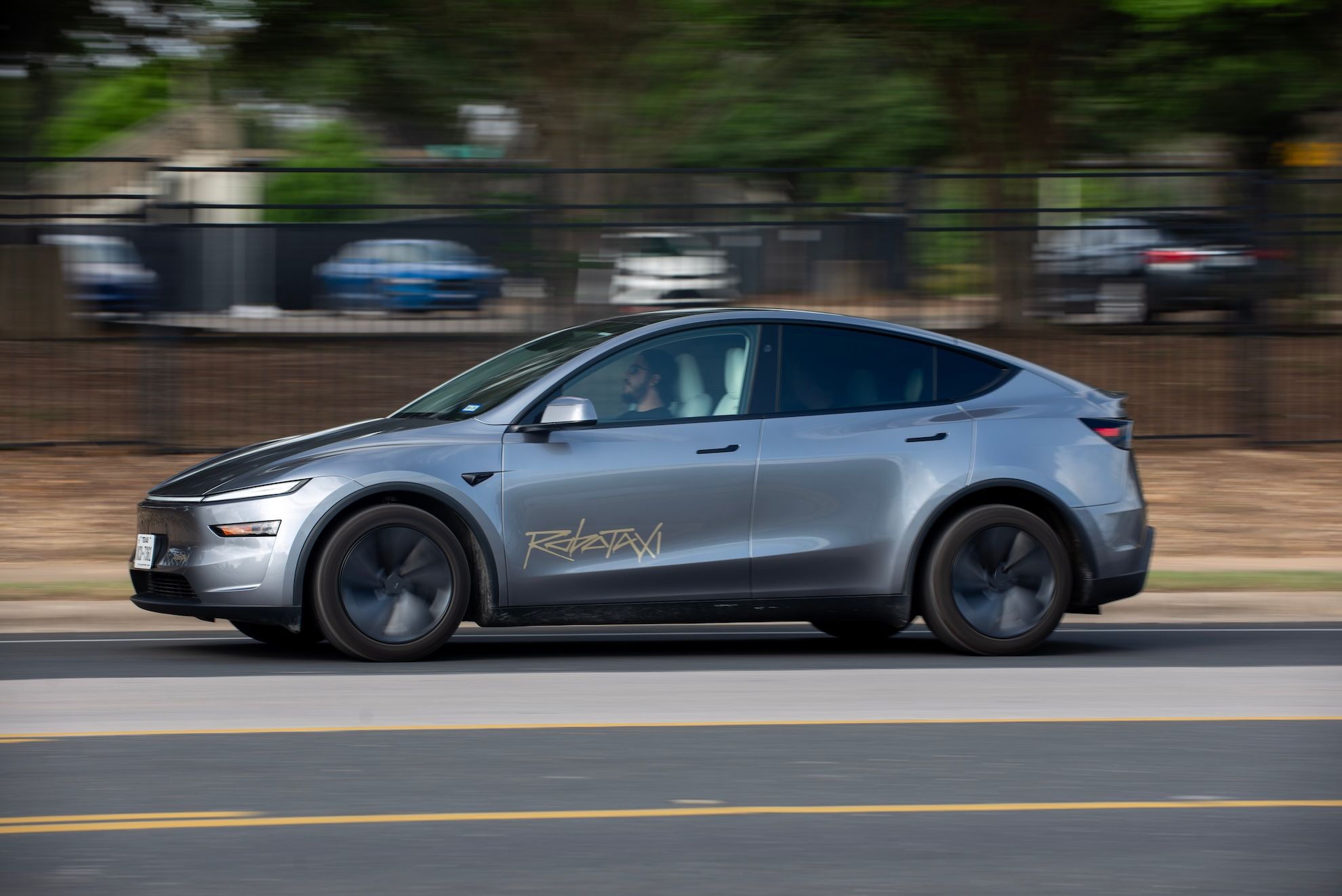
Image credits: Tim Goessman/Bloomberg/Getty Images
Welcome back to TechCrunch Mobility — your central hub for news and insights on the future of transportation.
You might recall the congressional hearing last month that sparked criticism against Waymo over its use of remote assistance workers in the Philippines. We have covered that issue extensively. You can read about the company’s remote assistance and road assistance teams here and here.
Waymo tends to get the most attention because, well, those robotaxis are now operating commercially in 10 U.S. cities, with more coming soon. But the issue of remote assistance is not a Waymo issue. It’s an autonomous vehicle technology issue.
A new report from Sen. Ed Markey (D-MA) makes my point.
Markey sent letters to seven U.S. companies — Aurora, May Mobility, Motional, Nuro, Tesla, Waymo, and Zoox — working on autonomous vehicle technology with a list of questions. He wanted to know how often these companies’ vehicles relied on input from remote staff.
They all refused to say, according to the results of Markey’s investigation. Markey said it was a “stunning lack of transparency from the AV companies around their use of remote assistance operators to help guide their AVs.”
You can read senior reporter Sean O’Kane’s article, which digs into the issue and includes the rather mute responses from the companies. (TechCrunch reached out to all of them.) One interesting admission from Tesla: The company said its remote assistance workers are authorized to temporarily assume direct vehicle control (a very different thing than “remote assistance”) as a final escalation maneuver.
But here’s the thing — this is not going away. And silence will not defuse the matter. If anything, Markey seems more motivated than ever to get answers. He is now calling on the National Highway Traffic Safety Administration to investigate companies’ use of remote assistance workers and said he is “working on legislation to impose strict guardrails on AV companies’ use of remote operators.”
A little bird

Image credits: Bryce Durbin
Nothing this week that we have been able to verify. Send us tips! Have one? Email Kirsten Korosec at [email protected] or my Signal at kkorosec.07, or email Sean O'Kane at [email protected].
🚗
Interested in advertising on Mobility? Contact [email protected] to discuss.
🚗
Deals!

Image credits: Bryce Durbin
It seems like just last week I was writing about Uber being everywhere, all at once. And I see it is still a trend, although this time it isn’t directly related to autonomous vehicles.
Uber said it is buying Berlin-based startup Blacklane, which provides on-demand, black-car chauffeur services, as the ride-hail giant expands deeper into luxury and executive travel services. Blacklane, which was founded in 2011, had raised more than $100 million to date from rental car company Sixt, Mercedes-Benz, and Alfahim, a conglomerate in the UAE.
The timing of the acquisition is notable. It comes just a few weeks after Uber announced the launch of Uber Elite, a chauffeur service that also offers a bunch of luxury offerings like airport meet-and-greets and in-vehicle amenities.
Other deals that got my attention …
Manna Air Delivery, a consumer drone delivery startup based in Ireland, raised $50 million from ARK Invest, the Ireland Strategic Investment Fund, Schooner Capital, Coca-Cola HBC, and Molten Ventures.
Saronic Technologies, an autonomous military ship developer based in Austin, raised $1.75 billion in a Series D funding round led by Kleiner Perkins. The company is now valued at $9.25 billion. Other investors include Advent International, Bessemer Venture Partners, DFJ Growth, BAM Elevate, and other new partners and recognizes the continued commitment of its existing investors, including 8VC, Caffeinated Capital, Andreessen Horowitz, Elad Gil, and Franklin Templeton.
Voltify, a startup that has developed a way to retrofit diesel locomotives with battery power, raised $30 million in seed funding co-led by Israeli venture firm Aleph and Australian miner Fortescue.
Notable reads and other tidbits

Image credits: Bryce Durbin
Also, the micromobility company created inside Rivian that spun out last year, will work with DoorDash to develop autonomous delivery vehicles. As part of the deal, DoorDash took part in Also’s $200 million Series C funding round, which was led by Greenoaks Capital. DoorDash is getting a seat on Also’s board of directors, too.
Baidu robotaxis stalled throughout Wuhan, China, in some cases trapping passengers for up to two hours due to system failure.
GM is ramping up its efforts to improve its advanced driver-assistance system, Super Cruise. CEO Mary Barra posted on LinkedIn that GM has started supervised testing of its next-gen automated driving system on public highways in California and Michigan.
“Soon, more than 200 supervised and manual test vehicles will be in live traffic, with trained drivers ready to take over at any time. This data will guide future updates to strengthen our autonomous capabilities,” she wrote.
Lucid issued a recall for more than 4,000 Gravity SUVs after discovering a problem with the seat belts.
The National Highway Traffic Safety Administration reported that traffic deaths fell 6.7% to 36,640 in 2025 from the prior year. This is the second-lowest traffic fatality rate in recorded history at 1,10 fatalities per 100 million vehicle miles traveled, according to the NHTSA.
All of those long TSA lines are prompting airlines to catch up and adapt. For instance, United Airlines has updated its mobile app to show TSA wait times at select airports.
The Subaru-Toyota partnership keeps cranking out EVs. At the New York Auto Show, Subaru introduced the all-electric Gateway, a three-row SUV that is essentially a rebadged Toyota Highlander EV.
Tesla’s Q1 sales figures show its cheaper vehicles aren't helping it turn around declining sales. (Some legacy automakers have seen EV sales plummet.) That seems to have affected Tesla’s workforce numbers at its Austin, Texas, factory, which dropped 22% in 2025. Meanwhile, I riff on the changing of the guard over at Tesla (and, no, I am not referring to the string of executive departures there, although that is interesting). CEO Elon Musk shared that production of the Tesla Model S and X has ended, a milestone that marks the shift away from building cars designed for people to drive and toward robots and self-driving cars.
Toyota's Woven Capital has appointed a new CIO and COO in a push to find the “future of mobility.”
Uber and Chinese autonomous vehicle company WeRide launched robotaxi operations without a human safety operator in Dubai as part of a broader expansion in the Middle East.
Waymo’s robotaxi service is now live at San Antonio International, its fourth major airport. Meanwhile, Wired looked at Waymo’s school bus problem (meaning the investigation into the illegal behavior of its robotaxis around school buses). The article provides new details on how the Austin School District tried to help Waymo solve the problem. It didn’t work.
One more thing …
My podcast, the Autonocast, spent some time talking with Ashu Rege, DoorDash’s VP of Autonomy. We recorded the episode prior to the Also-DoorDash announcement, which makes his comments about the company’s strategy all the more interesting. Check out the episode here.